
Plastics ending up in the ocean is a huge problem, we have heard it a thousand times before. Yet Australia’s beaches are seemingly plastic-free compared to many other places around the world. It is entirely possible that you will not find a single piece of plastic if you were to go for a walk on your closest beach today. You might find something, but we can feel reassured that this is just an odd bit that we happened to stumble across, right?
A week before Christmas, I moved from a Sunshine Coast beach community back to the city. This brought an experiment I have been doing for all of 2025 to a slightly early end. For most of the year, I went on a few beach walks a week, during which I picked up all the plastic I could find to see how much I would accumulate.
Australia’s Beaches Have a Plastic Pollution Problem
My experiment coincided with the release of research by CSIRO, which found that plastic pollution on Australian coastlines had reduced by 39% from 2011-2014 to 2022-2024. It sounds like a fantastic achievement, and that was how it was touted by most media outlets that shared it. But it quickly becomes less impressive when reading about the research in further detail. The 2022-2024 research found 0.15 waste items per square metre of land covered by the survey, which equals a piece of plastic rubbish every five steps. That hardly sounds like clean beaches to me… But it felt pretty representative of the amount of plastic pollution I was picking up on the Sunshine Coast’s beautiful beaches on most walks. The reality on the ground (pun intended), is that Australia’s beaches have plenty of plastic pollution.
Plastic seemed extra prevalent after weather events that drove the ocean wild. On a cloudy March morning I went for a walk on the North Shore Beach in Mudjimba, where I picked up more rubbish than I could carry. A passerby who saw me gave me a spare dog waste bag so that I could carry it all. Areas loved by fishermen were also abundant in plastic, as I found out on a visit to Noosa.
So How Much Beach Plastic Did I Collect in One Year’s Time?
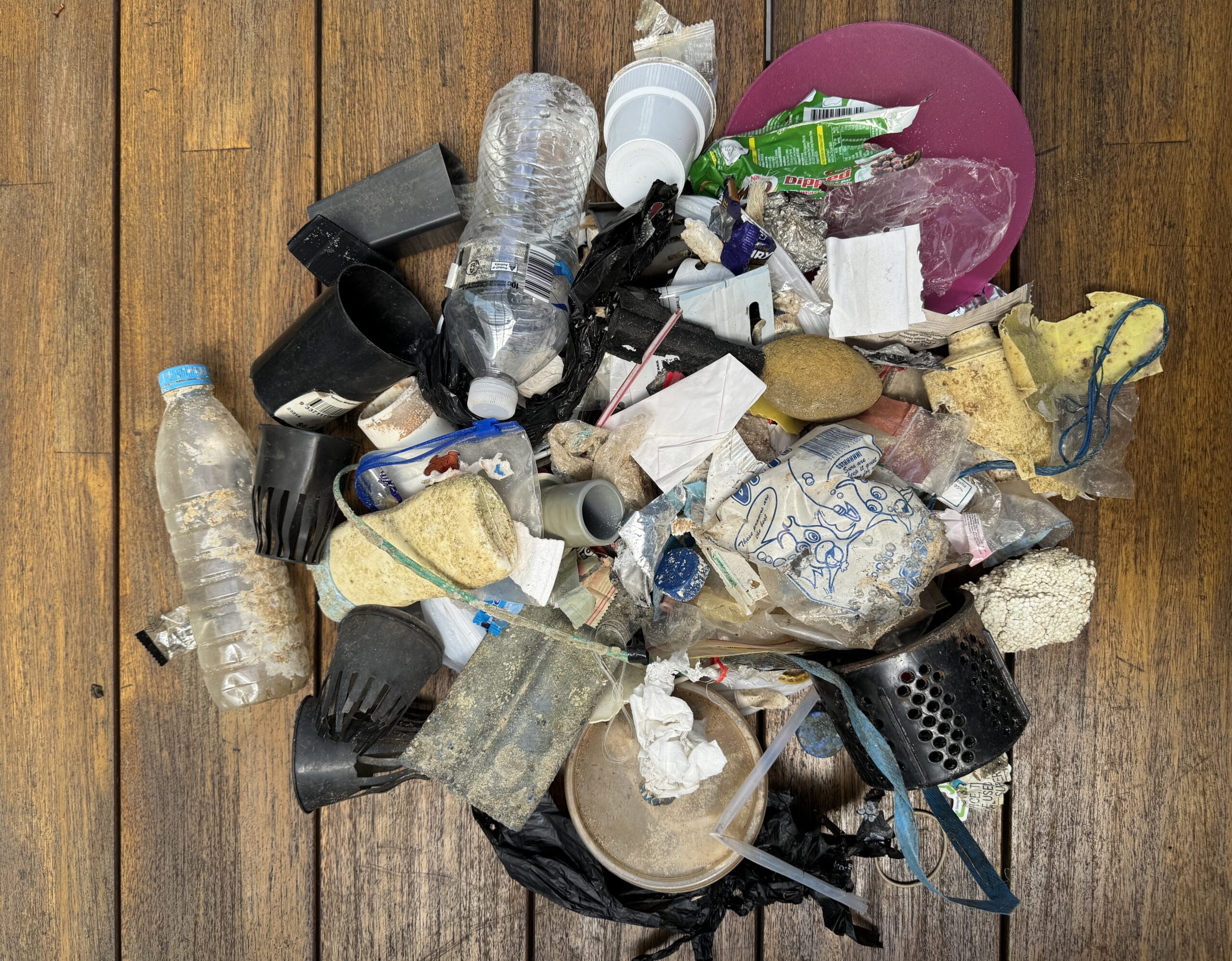
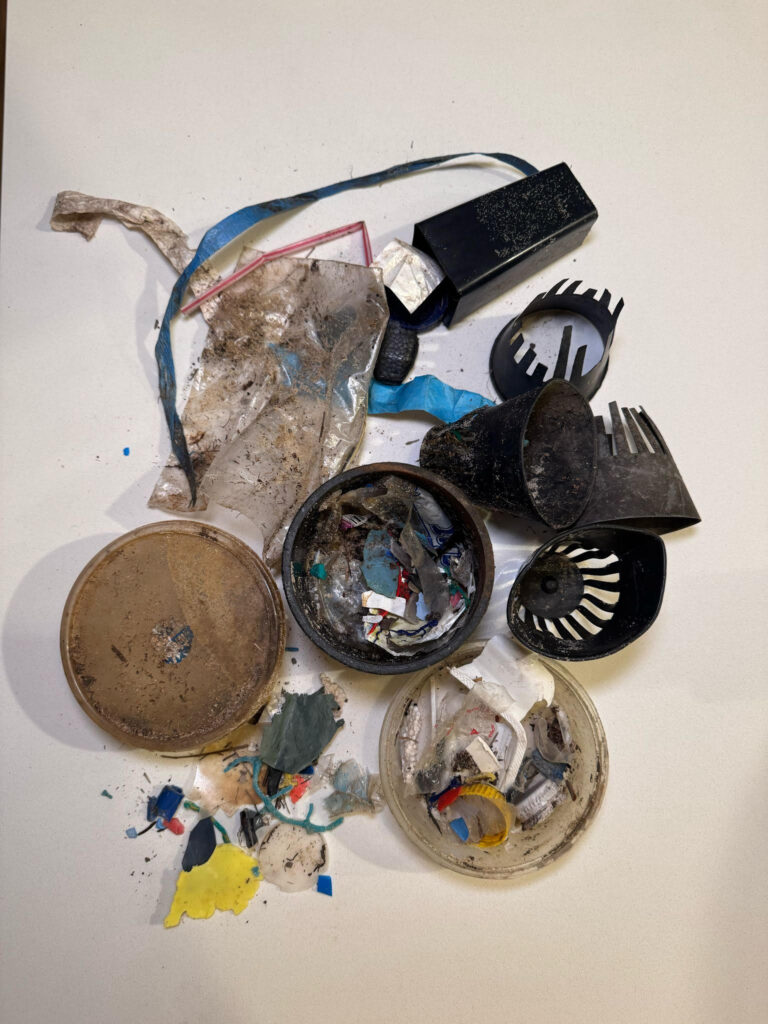
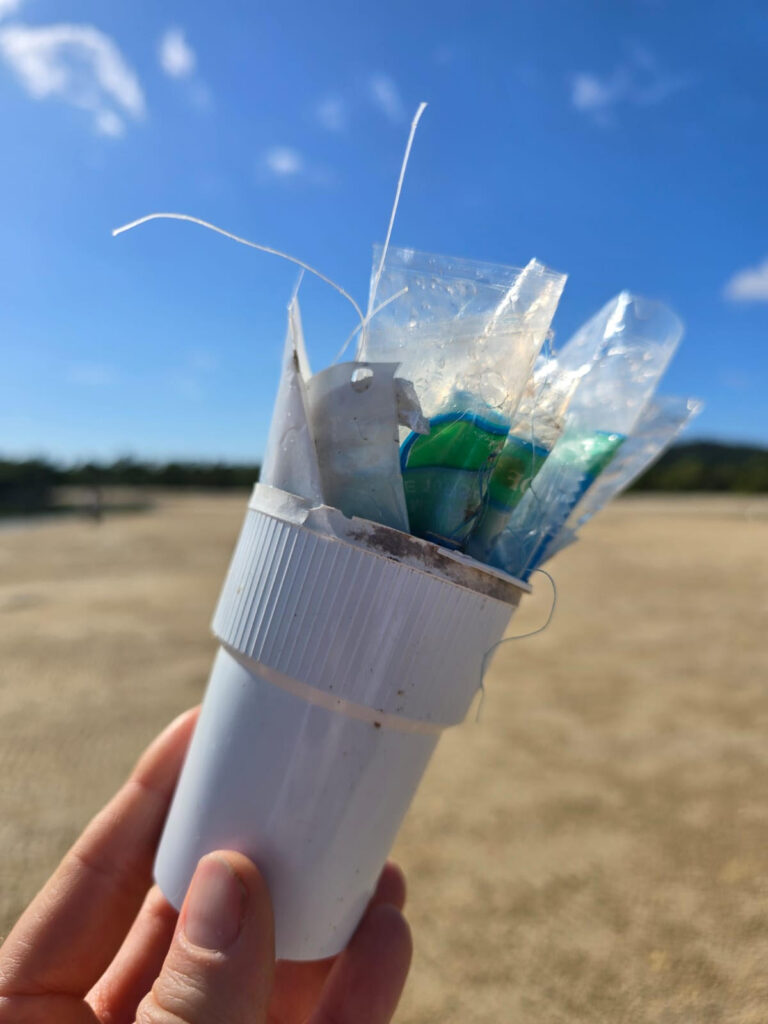
I picked up an impressive collection of bottle caps, food wrappers, fruit stickers, plastic bags, bits of rope, straws, microplastics, and more. Just a few days ago, I weighed the unappealing bounty. It weighed in at 1,184 grams of plastic, well over a kilo. I never set out to go on a beach clean-up. I just picked up and accumulated what I happened to see in the sand on any given day. I’m sure that there were many pieces of rubbish that I did not even notice.
Are We The Plastic Pollution Problem?
Unfortunately, yes. The pervasiveness of plastic in our daily lives is the problem. It seems impossible to go even a day without touching disposable plastic, but not everyone looks for ways to avoid plastic. Every bit of plastic that we throw out has to go somewhere and there is no good place for it. It goes in landfill, or reduces to microplastics in the soil, water or air.
CSIRO believes that the recent reduction in plastic pollution happened thanks to better waste management, public awareness, and clean-up efforts. For example, a big reduction in drink containers on beaches is in part thanks to initiatives like Containers For Change. But the researchers conclude that more needs to be done. Which is a bit of a worry, because plastic use is expected to double by 2040. And it is estimated that, at present, a garbage truck’s worth of plastic ends up in the ocean every minute. I just hope that the rubbish I picked up off our beaches this year does not meet this fate.
Plastic Pollution is A Disaster For Nature… And Our Health
While environmental concerns might not be a top tier priority for all, there is another major thing that should scare everyone. We can now reliably say that we all have microplastics in our bloodstreams and in our brains. And yes, this includes you. People in urban areas are more affected, but no one escapes it, no matter how rurally you live. The extent of the effects on our health – inflammation, hormonal issues, dementia, cardiovascular problems, and more, remains to be uncovered. But scientists agree, there is nowhere left on Earth where one can avoid ingesting, inhaling, or absorbing (through skin contact) microplastics. They are literally everywhere.
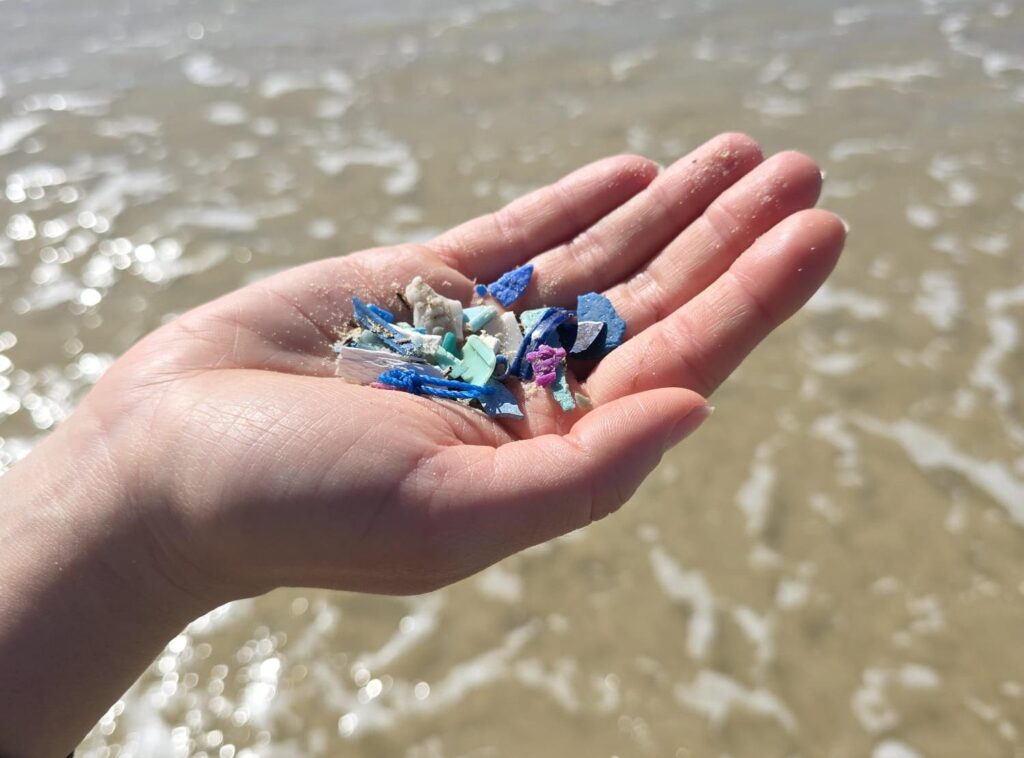
The environmental and health impacts will only exacerbate as we keep accumulating plastic in waterways, soil, air, and our bodies. There is no denying that plastic products can be a net positive in many scenarios. We are all glad that IV drips exist! Just to name an example of a piece of plastic that can be lifesaving. On the other end of the spectrum are plastics forced on the consumer that they do not even want, like fruit stickers. There are arguments for them (mostly in favour of supermarkets), but they are weak compared to the arguments for IV drips. While South Australia tried (and backtracked), policymakers should really aim for this low-hanging fruit…
So What Can We Do?
Bioplastics might sound like a solution, but it is not the silver bullet for plastic pollution. They can lead to net environmental harm if not sourced responsibly and disposed of the right way at the right facility. On top of that, bioplastics use is more widespread than facilities that can process them correctly in Australia. The University of Technology of Sydney states that there is no benefit to biodegradable plastic if it ends up in landfill. Which is exactly where nearly all of it goes. If it ends up in the environment, it causes the same damage as conventional plastic, because it also takes years or decades to break down. Unless the bioplastic is home compostable, and you have a compost bin at home, it offers very limited benefits.
Eliminating plastic is not the goal right now, but we cannot allow our reliance on it to increase. It must go down. And while we wait for snail-paced progress to occur in policy and industry, we can start making changes at home. We can buy cotton clothing instead of polyester, stop using clingfilm, buy fruit and veg without produce bags, or make muesli bars at home instead of buying them individually wrapped. Whatever it is that decreases your reliance on plastic bit by bit. You will be surprised that you can do without many plastic items that you use on automatic pilot.
This was a very interesting article to read, creating awareness is key! Thank you!