
With 2025 in our rearview mirror, I thought I should add up how much money I spent on recycling schemes last year. For years, I have been ‘trying to do the right thing’ but rarely went out of my way for it. In 2025, I upped my effort and found some impressive organisations tackling hard-to-recycle items. My list of what I divert from landfill grew long, but I also started paying to get my items recycled rather than binning them.
Ignoring the gnawing voice in my head that argued that I shouldn’t have to pay to recycle, I took every landfill alternative I could find. So, without further ado, here is how much of a hit to my wallet it was:
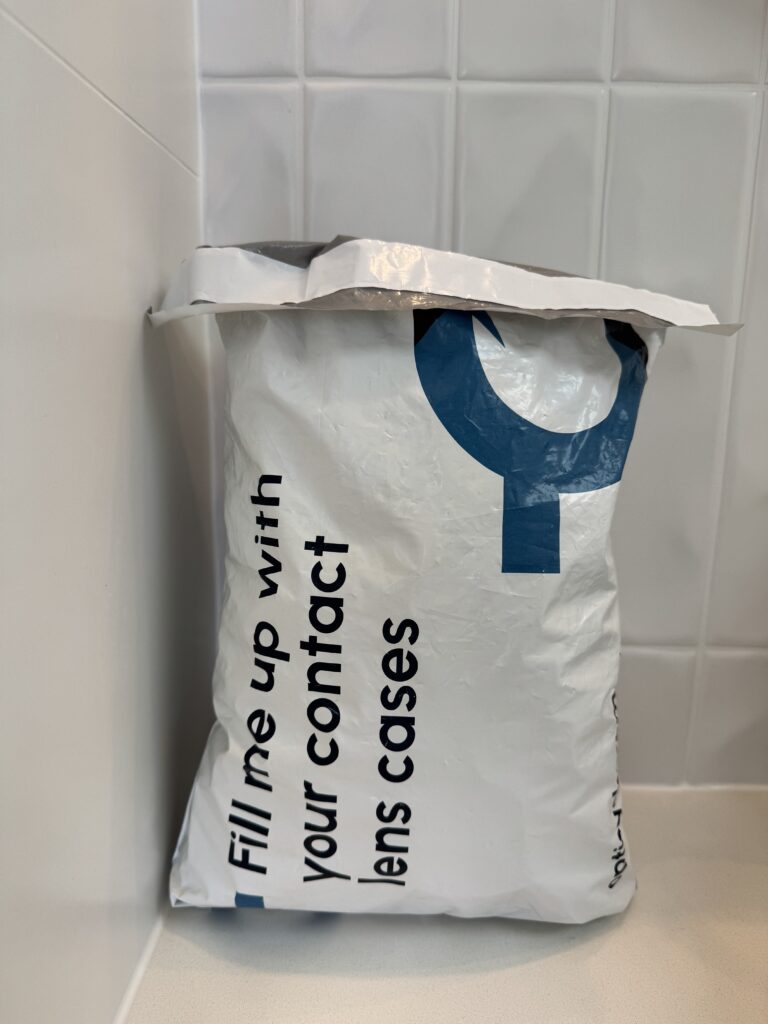
| 1. | $59.90 | Opticycle | Contact Lens Case Recycling Satchel x2 |
| 2. | $35 | Upparel | 10 kg Clothing Recycling Collection x1 |
| 3. | $27.50 | Textile Recyclers Australia | Underwear Only Satchel x1 |
| 4. | $35.20 | Textile Recyclers Australia | 10 kg Clothing Recycling Collection x1 |
| 5. | $35.20 | Textile Recyclers Australia | 10 kg Clothing Recycling Collection x1 |
| Total | $192.80 |
How Do I Feel About the Money I Spent On Recycling?
I made a little note every time I paid to recycle something but did not add up the total until now. Looking back now, I am happy. It cost me less than $200 to send a huge volume of stuff to the right place. This amount, spread out over a whole year, did not feel excessive.
I use day lenses. Dry eye syndrome prevents me from using monthly contact lenses. This is a source of plastic in my life that really, really, really bothers me. But it is such a big source of comfort for me that I have been doing it for a long time. In 2025, I recycled every single contact lens case that I used in a single satchel. That felt great.
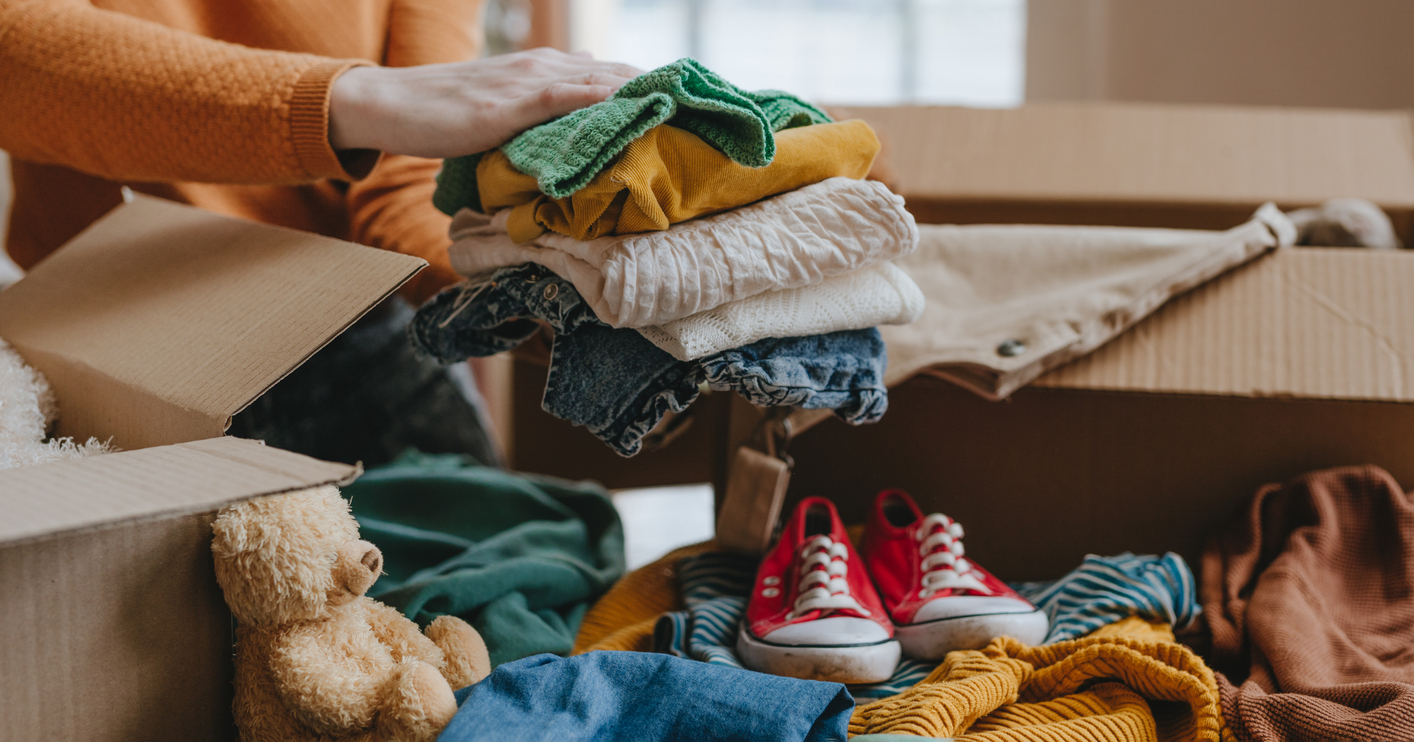
I also did not throw a single piece of clothing in my bin, not even swimwear or underwear. I was even able to send two old pillows and a king-size mattress protector to Textile Recyclers Australia. But it was a sobering realisation that my two-people household produced about 30 kilos of textile waste in a single year, in addition to two or three visits to the OP shop.
Should Recycling and Waste Disposal Cost Us Money?
Throwing something in the bin may feel like it is free. It is not; we pay rates to our local Council for their role in processing our waste. While I diverted a big volume of waste from my household, my rates bill stayed the same. It would be nice to get a reward for participating in these recycling schemes. For now, this was a straight out-of-pocket expense.
I wish it was free of charge. I am sure that this would motivate hundreds of people to participate. But turning recycling into a business opportunity is a very new industry. Most of the organisations on my list have been around for less than a decade and I want to support their work. These businesses are usually operating out of one or two plants around Australia, so getting the items to the right place is a big logistical challenge.
This is also true for items I recycled for free by just dropping them off in store. In this case the retailer participating in the recycling scheme absorbs the logistics costs. For example, you can drop of used sheets and towels at Sheridan stores around the country and drop of empty blister packs at any pharmacy participating in the Pharmacycle program.
In 2025, my household received $42.90 in refunds from the Containers for Change. This is an NGO funded by beverage manufacturers that sell eligible cans and bottles. Of course recycling is a no-brainer when you receive an incentive for it. Sheridan also offers a discount to use on the day you drop in your old sheets and towels.
Is This Really Our Problem To Solve?
In the Netflix Documentary Buy Now! The Shopping Conspiracy, Eric Liedtke, former Adidas Executive, said “It is not our problem”, alluding to the end-of-life disposal of everything we buy. It was great to learn about Eric and professionals in other industries trying to raise the alarm about the excessive waste humanity creates and the need for different product design. This is very important.
But I don’t fully agree with this statement. I believe that we share the burden of diverting waste from landfill as consumers. Of course, recycling services need to be far more extensive and integrated than they are now. They also need to be reliable, not misrepresentations or greenwashing schemes (looking at you, H&M). And as many items as possible need to be biodegradable in a real way, not requiring complex processing plants that are nowhere to be found. But we should not expect our role as consumers to be passive. We bring these items into our homes; we are responsible for how they are moved on from there.
This may mean taking a bag of sheets or old sneakers to the shopping centre or posting a box of textile waste. You can also compost your kitchen scraps at your local community garden or at home. When you go shopping next you can see which brands you like use recycled fibres to reward businesses for repurposing. There are things we can already be doing. We do not need to sit around and wait for the world to change.
Great Article. I’d be interested to know what disposal or recycling pathways these companies are used for this material, including any sorting, processing, or final waste treatment steps.
This is a great question! All companies on this list explain their processes and/ or show their sorting and processing on their websites or social media (entertaining to watch!). I think that recycling businesses have realised that they must be very transparent to ensure that people trust their programs.