
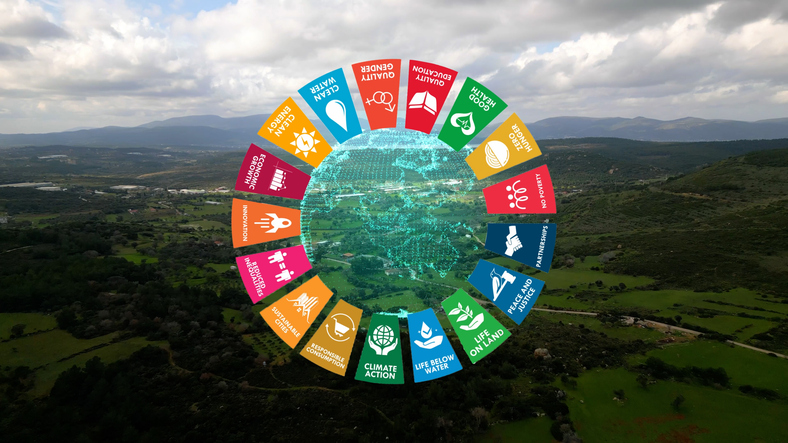
Global warming, deforestation, overfishing, industrial pollution, overflowing landfills, there is no shortage of growing problems caused by mankind. The destruction seems to get more efficient and devastating by the year, and respected voices are sounding the alarm bells that the damage is about to become irreversible. Yet corporations are still brutally boosting their bottom-line and governments drag their feet when it comes to meaningfully mitigating harm to places and people. Some organisations out there are fighting the good fight. Some people are simply not very interested, preferring to focus on other aspects of life. Others are planning an exodus to Mars. And for those who want to be responsible global citizens and enjoy life on Earth, it seems like the little bits that we can do daily fail to make a difference.
This was the state of affairs in the world in 2018 when I attended the University Scholars Leadership Symposium, organised by Humanitarian Affairs Asia, held at the United Nations Conference Centre in Bangkok. And, ironically, it is the story now in 2025. We are still trying to right the same wrongs in the world (or still aiming to put a man on Mars). While the news often paints a bleak picture, there are masses of people out there who want to make the world a better place. This symposium was one of those moments where those people were brought together. Over 1,000 delegates like me listened to speeches by Asia-based NGO leaders, motivational speakers, and people who held different positions in the regional offices of the UN and spent a day volunteering in the community. All in order to encourage us to put our own humanitarian ideas into action.
Spending a Week in the UN Atmosphere
As a university student, I believed that social impact and environmental protection required a top-down approach. The top, in my eyes, was the United Nations. A place where all countries come together to discuss shared problems and create directions for a better world. Member states then implement these decisions at home, creating positive outcomes for the world at large. I was incredibly excited to go to a place where such important things happened.
The United Nations Conference Centre certainly felt important. The huge building held an air of prestige, and the student delegates from all over the world filled it with excitement. All these people were passionate about big issues. Some had already started their own charitable organisations. The NGO leaders that were invited to speak shared their humanitarian calling with us, from looking after orphans in Cambodia, to helping North Korea defectors start a new life, to giving books to children in low-income communities in every corner of the globe. We learned about the work of the United Nations from the people who were working for a variety of UN agencies. It was a wonderful thing to be a part of.
Looking back on this week in Bangkok now, I can say it heavily influenced my views on the world and how we can make it a better place. The Aha! moment happened during the keynote address by Kishore Mahbubani, a former Secretary General of the UN Security Council. His speech focused on the importance of multilateral institutions like the UN, the ASEAN, and the World Bank, in allowing countries to collaborate in better and more efficient ways than ever before. But it was during question time that he touched on the importance of our individual accountability as responsible global citizens.
A Better World Requires the Participation of People, Not Just The UN, Governments, and Corporations
Mr. Mahbubani spoke about the importance of protecting our oceans and the creation of the Law of the Sea Treaty of 1994 after a a member of the audience asked a question. This Treaty states what member states can and cannot do in the oceans, but it has a major flaw. It does not cover the protection of marine life. Even though, the oceans were already facing a crisis of overfishing.
“Fish species are dying.” He said in frustration. “You know that! It’s happening! And you are not protecting these fishes!”
Overfishing was, and still is, a huge problem. But why was he asking a big group of university students to deal with this problem? What could we possibly do about it? He went on to say that there is an urgent need for a Convention to Prevent Overfishing. This idea of his has lived in the back of my mind. It is now 2025, seven years on from the symposium and 21 years since the Law of the Sea came into effect. There is still no Convention to Prevent Overfishing. Even though UN Sustainable Development Goal 14 is ‘Conserve and sustainably use the oceans, seas and marine resources’.
So why did Mr. Mahbubani ask us to deal with overfishing? Well, he brought up this issue in the context of responsible global citizens. His advice for us was to give equal weight to what is good for your country and what is good for the world. That is what guides the behaviour of responsible global citizens. In this context, his comment made perfect sense. After all, we:
- Were there because we care about the ideals and causes the United Nations stands for.
- Were a group representing 87 countries, including all of Southeast Asia, China, Japan, Australia, New Zealand, the United States, Italy, Lebanon, Kenya, Mexico, and more.
- Many of us consume fish on a regular basis.
While overfishing may happen without our support or consent, we may be unknowingly contributing to the problem. In Australia, more than half of all seafood we consume is imported. This seafood importation happens with lax supply chain traceability. Very little prevents protected fish stocks from ending up on our plates. But does that absolve us of responsibility if we eat an overfished species? It might start with a trawler in the ocean, but it ends on our plates.
The Actions of Responsible Global Citizens
We have the option to turn down poor product offerings and demand a higher standard of sustainability from our product and service providers. I am sure we can all think of examples where governments and corporations have taken public opinion on board. After all, your loyalty matters to them. In the case of fish, we can opt for species that produce little bycatch or are fished sustainably. But this way of thinking can really apply to anything. Finding small actions that contribute to a more sustainable world, from choosing your seafood carefully to buying fair trade chocolate or sending your old sheets to be recycled, has a flow-on effect that will accumulate if dozens, then hundreds, then millions of people are doing them. The oh-so-cliché phrase “we are all in this together” rings true.
Countries may fall short of the targets they set at UN conventions and pledges are not always seen through. Conflicting interests, changes in leadership, poor policy decisions and resource management are often to blame. But our homes and daily lives are run in a similar manner. We also juggle conflicting interests like convenience and sustainable choices and must manage our resources of time and money. We may struggle to work out how to best reduce waste, limit our carbon footprint, or contribute to good causes, but every little change really does matter to the bigger picture.
If you are a university student reading this, see if you can make it to one of these symposiums. It is an eye-opening experience that will enrich your life.