
There seems to be a specific product for every single cleaning job. Surfaces, appliances, objects, you can buy a product claiming to be the optimal solution for every single one of them. I have looked at the crowd of spray bottles and aerosol cans under my sink and wondered how many of them I really needed more than once. Sustainable kitchen cleaning, in my mind, means having a small collection of products, preferably without plastic, that work well and are multi-purpose. After some trial and error, these are the new clean and simple habits that have stuck.
Products I Use for Sustainable Kitchen Cleaning
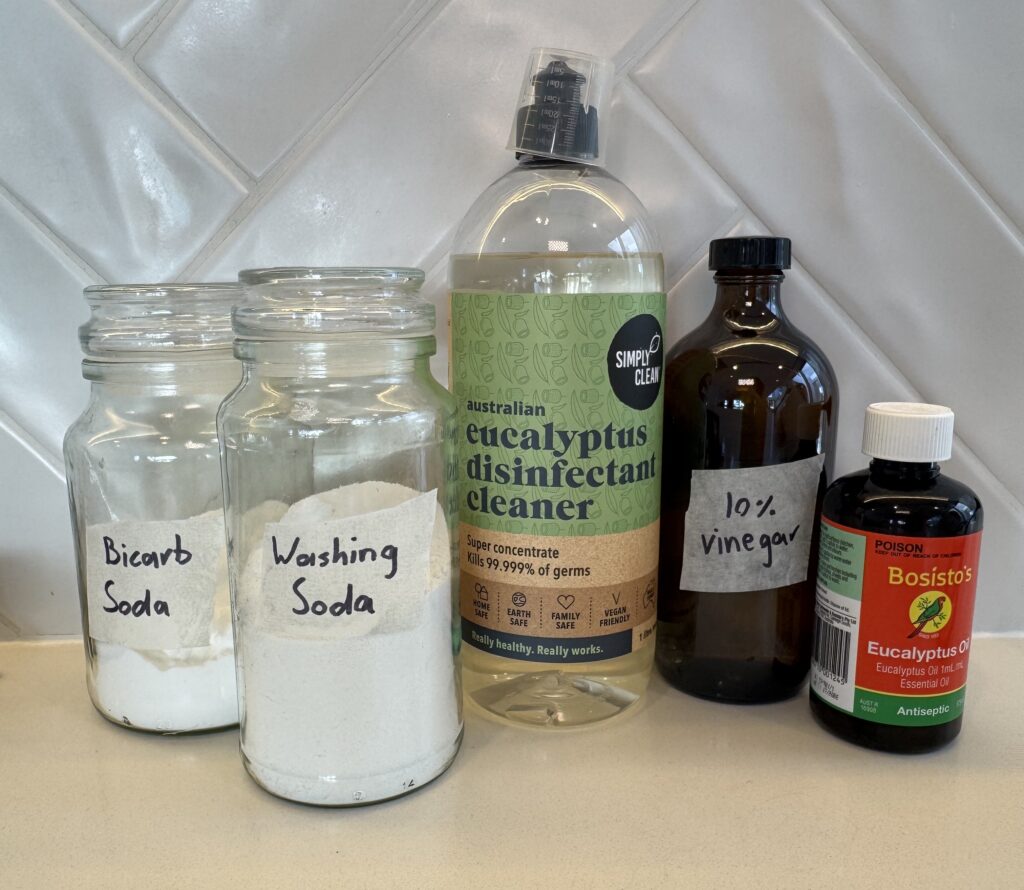
My cleaning products now include bicarb soda, washing soda, and 10% white vinegar from The Source bulk food stores. The first two I keep in old glass containers that once contained instant coffee. I bought a glass bottle for the vinegar at The Source. All these glass containers will last infinitely (provided they never take a tumble). I keep cleaning and cooking bicarb soda in separate containers.
I also have a large 1 litre bottle of Simply Clean Australian Eucalyptus Disinfectant Cleaner. While this product comes in plastic, it will last much longer than a spray bottle product that does not get refilled. Finally, I have a bottle of eucalyptus essential oil. I love its smell, and its disinfecting properties. You never need more than a few drops at a time, so this is another product that rarely needs replacing.
While I have played around with DIY cleaning solutions in the past, I now use the simple methods I share with you below.
6 Simple Hacks for Sustainable Kitchen Cleaning
1.Clean Your Oven with Bicarb Soda and Water
Cleaning the oven was the cleaning job I used to dread the most. The safety goggles, a mask to avoid inhaling caustic fumes, covering your arms to avoid chemical burns, oven cleaners are just unpleasant all around. The last (ever) oven cleaner I bought had warnings like corrosive, extremely flammable and poison. These aerosol cans are hazardous waste that should be dropped off at specialised facilities. I still do not enjoy cleaning my oven, but I now feel safe doing this chore with this new method.
Using a bowl, I mix a larger quantity of bicarb soda with enough water to create the consistency of a batter. I spread the mixture using a basting brush, throughout the oven and oven trays (not on the heating elements). I leave it to dry out for a few hours and spray it with a bottle of 50% cleaning vinegar and 50% water to help lift off extra grease and wipe everything up with washable cloths.
2.Clean Your Rangehood Filters and Gas Stove Burner Grates with Washing Soda and Hot Water
Washing Soda is an excellent degreaser (and stain remover for clothing, but that’s another topic). Just fill your sink with hot water and two tablespoons of washing soda. Stir to dissolve and soak your rangehood filters or burner grates for at least half an hour. You will see little blobs of grease float to the surface and the water will become murky. Give everything a good rinse and scrub after that.
3.Clean Your Drain with Bicarb Soda and Vinegar
You can do this in two seconds. Throw half a cup of bicarb soda into the drain. Throw in the same amount of vinegar and watch it fizz. Afterwards just wipe away any bicarb soda residue and give the sink a good rinse and wipe.
4.Mix Your Own Surface Spray Using a Cleaning Concentrate
To clean my benchtops and stove, I use a cleaning concentrate and an old surface cleaner spray bottle that I refill. I dilute my Simply Clean Concentrate following the instructions – 25ml of the cleaner per litre of water for everyday use, and 100ml per litre for heavy duty cleaning. This is a multipurpose cleaner that is also suitable for kitchens, bathrooms, and even floors and walls, but I only use it as a surface spray. You can also mix equal parts vinegar with water and add some drops of essential oils, like eucalyptus or tea tree oil.
5.Clean Burned Pans with Bicarb Soda
Sustainable kitchen cleaning is all about getting a lot of use out of the same cleaning product with a low environmental footprint. This is yet another use of bicarb soda.
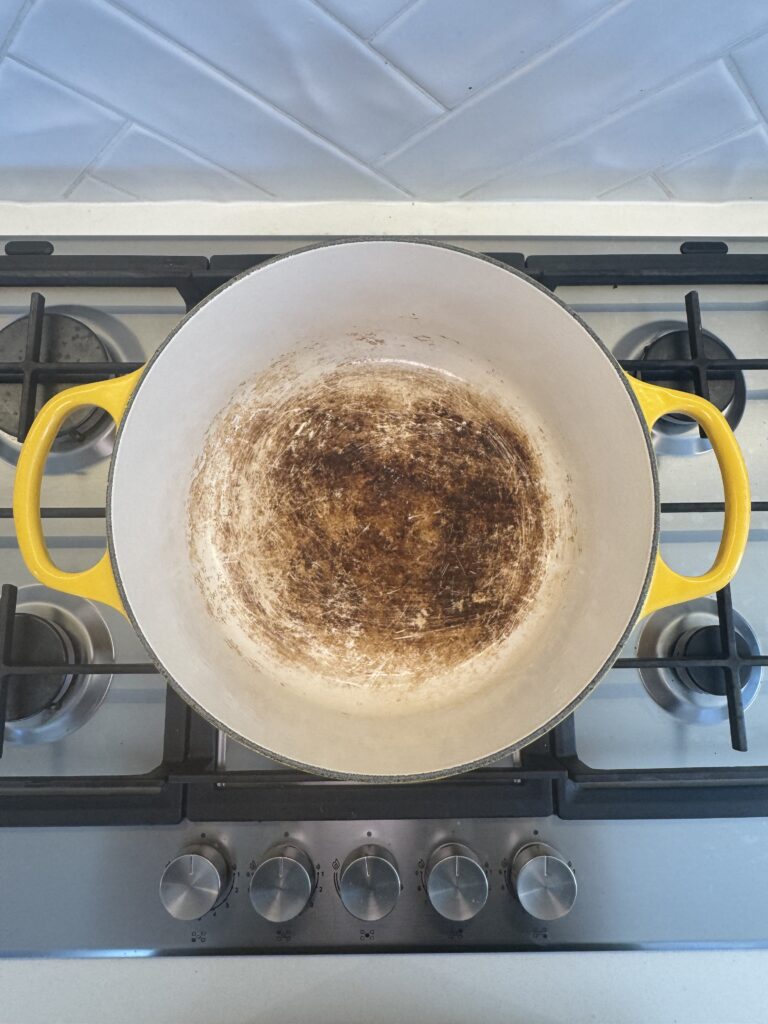
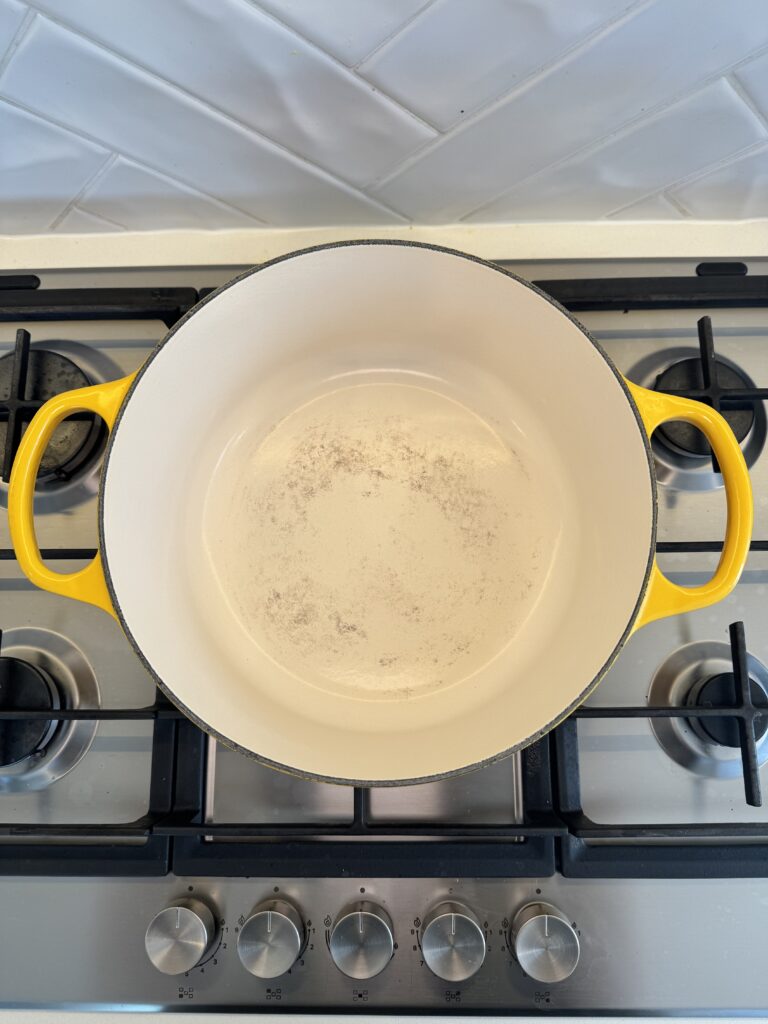
Sprinkle a generous amount of bicarb soda on the bottom of your burned pan and add a layer of water. Bring to a boil and then reduce to a simmer, you will see the water start to fizz as the bicarb soda gets to work. After a while you will be able to scrape off some burned bits with a silicone spatula. Leave the solution to work until you are confident that most of the burned bits have come loose. Wash the pot as you normally would.
6.Clean Your Floors with Hot Water and Eucalyptus oil
Clean floors have never smelled so good! I add a capful of eucalyptus oil to a bucket of hot water and use this to mop. No special floor cleaner with a chemical formulation is needed with this natural disinfectant.
Love it.