

Last year I bought an expensive, simple white T shirt, the kind that combines well with anything. I thought that it would last me a long time because I bought it from a nice brand. Fast forward two months later, it had the kind of yellow tinge that you would expect to develop after maybe two years. As much as my intention was to slow down the number of items entering my wardrobe by buying quality, this one was a flop. This T shirt had become textile waste, destined for landfill… or was there a way to recycle my old clothing that I did not know about?
How Much Textile Waste Does Australia Produce?
We might not get the intended amount of wear out of an item despite our best care and effort. Every item that hangs in our closet will eventually need to move on from there. And to top it all off, I own more clothing than I need, and I am not alone. Recent data shows that Australia sent over 220,000 tonnes of clothing to landfill in 2023. In the same year, 1.42 billion clothing pieces were sold in Australia. If we averaged that out over the population, that would be 53 items of clothing for every Australian. We rank among the top clothing consumers in the world. We can commit to buying less, that is the easy part. But we still need to deal with what we already own.
Textile waste cannot be tossed in the recycling bin at home. Op shops and charities in developed countries, including Australia, are increasingly unable to process the sheer amount of unwanted clothes they receive. Excess and poor-quality items are exported to developing countries, and end up in dumping sites. This is becoming a very serious issue in places like Chile and various countries in Africa.
While we can slow down our purchasing habits, we have got to deal with the clothes already in rotation. We are all in charge of disposing what we already own. I was pleasantly surprised to find many ways to divert my clothes and other textiles from landfill. Australians can recycle close to all the textiles we use in our daily lives. If that sounds daunting, I promise you that after reading this list, you’ll see that it is easy.
1. Clothing, Curtains, Mattress Protectors and More with Upparel
- What can you recycle here? Clothes, hats, socks, shoes, wireless bras, swimwear, wetsuits, linen, fabric mattress protectors, fabric couch covers and curtains, and sewing scraps
- How much does it cost? $35 collection fee for a 10 kg box either a courier collection or postage via Australia Post, depending on the area you live. Some companies have partnered with Upparel to create free drop-off locations in store.
Upparel is the perfect place to send clothes that are simply not in the right condition to donate to charity. No one wants to wear a sweater that is more pill than knit or a cotton shirt that was most recently enjoyed by moths. Upparel is one of the most comprehensive textile recycling service there is in Australia. Upparel accepts a wide range of items, and any items not fit for re-use are repurposed by local designers or turned into UPtex – a material made from 100% textile waste that has many applications.
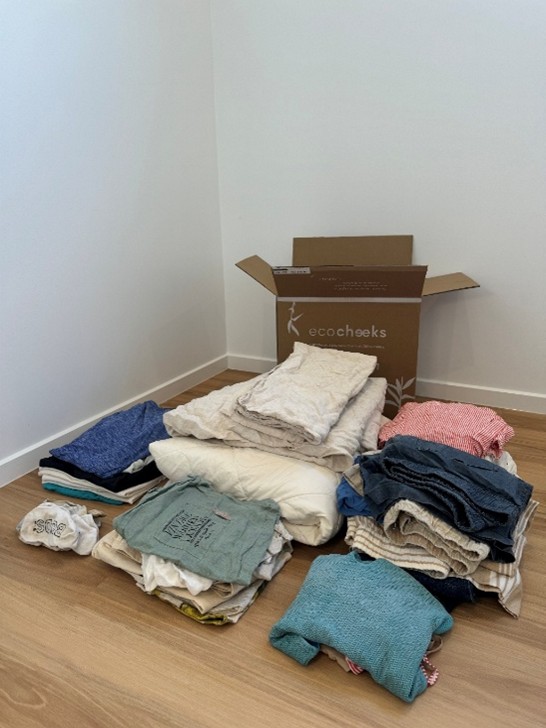
In my last shipment to them I re-used an old cardboard box and filled it with 10.2 kg of washed textile waste. The box contained:
- 8 T-shirts
- 5 and half pairs of socks
- 4 dresses
- 3 pairs of pants
- 1 legging
- 2 pairs of shorts
- 2 bathing suits
- 1 bra
- 10 fabric bags
- 1 tea towel
- 1 king size mattress cover
2. Sheets, Towels, and Pillowcases with Sheridan
- What can you recycle here? Used sheets, quilt covers, pillowcases, and towels from any brand (washed)
- How much does it cost? Nothing! Sheridan accepts your items without charge and will give you a 5% discount on a same-day purchase over $100.
I have actually known about Sheridan’s recycling program for years and imagine that it is the most well-known recycling scheme on this list. Sheridan sends your items to the BlockTexx® facility in Loganholme, Queensland. This recycling plant converts them into raw materials for a variety of industries. Blocktexx has developed and commercialised a technology that separates polyester/cotton blends, 100% polyester, cotton and fibres such as bamboo, flax, rayon, tencel, modal. At a commercial scale, they create 100% recycled base materials for the fashion, building and agricultural industries. In the process, BlockTexx uses their own blockchain technology for increased transparency in their recycling process to Sheridan and other supply partners (like Give a Sheet For The Planet).
3. Shoes with Laces with TreadLightly
- What can you recycle here? Sneakers, Runners, Sports Shoes, Football Boots, Hiking Boots, Golf Shoes, Leather Sports and School Shoes, Thongs and Slides
- How much does it cost? Nothing! Just find your local drop-off point.
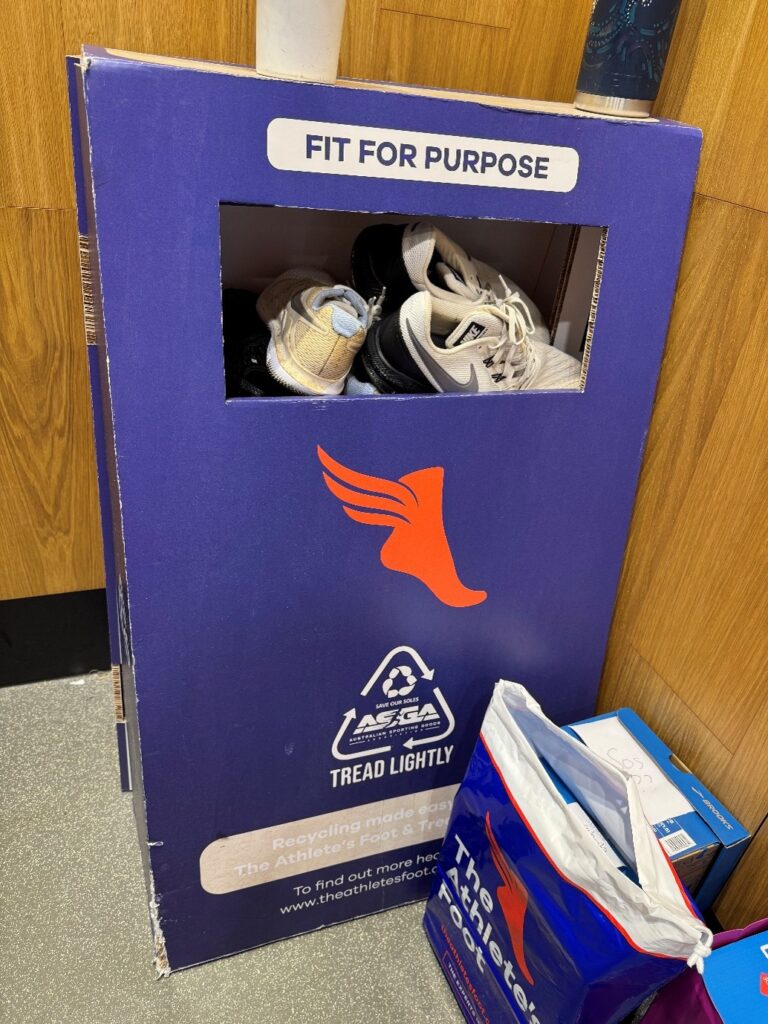
Treadlightly is an initiative by the Australian Sporting Goods Association (AGSA) and recycling company Save Our Soles. You just wash your used shoes, tie the shoelaces of matching pairs together and drop them off at one of their 900+ collection sites. Most of the major sports and lifestyle footwear brands are participating, so you will not struggle to find a drop-off point in your local shopping centre. I dropped off four pairs at my local Athlete’s Foot. Your items are then collected, sorted, and taken to the Save Our Soles recycling plants in Victoria and Queensland. Here, the shoes will be broken down and reusable components, such as rubber, leather and fibres are turned into the Save Our Soles recycled crumb. Save Our Soles mixes this crumb with recycled tyres and turns this into shock pads and flooring solutions for gyms and other types of businesses.
4. Underwear with Textile Recyclers Australia
- What can you recycle here? Underwear, Underwire Bras, Bras
- How much does it cost? $25 for your 38.5cm x 26 cm satchel
Yes, that’s right. The world has come a long way. Project Down Under by Textile Recyclers Australia started offering this service in October 2024, taking your underwear and bras, washes it in a certified industrial laundry, and repurposes the materials. Just buy your compostable satchel on their website, stuff it with your worn-out undies, and drop it off at your local post office. You will be able to fit a surprising amount of underwear into this satchel.