
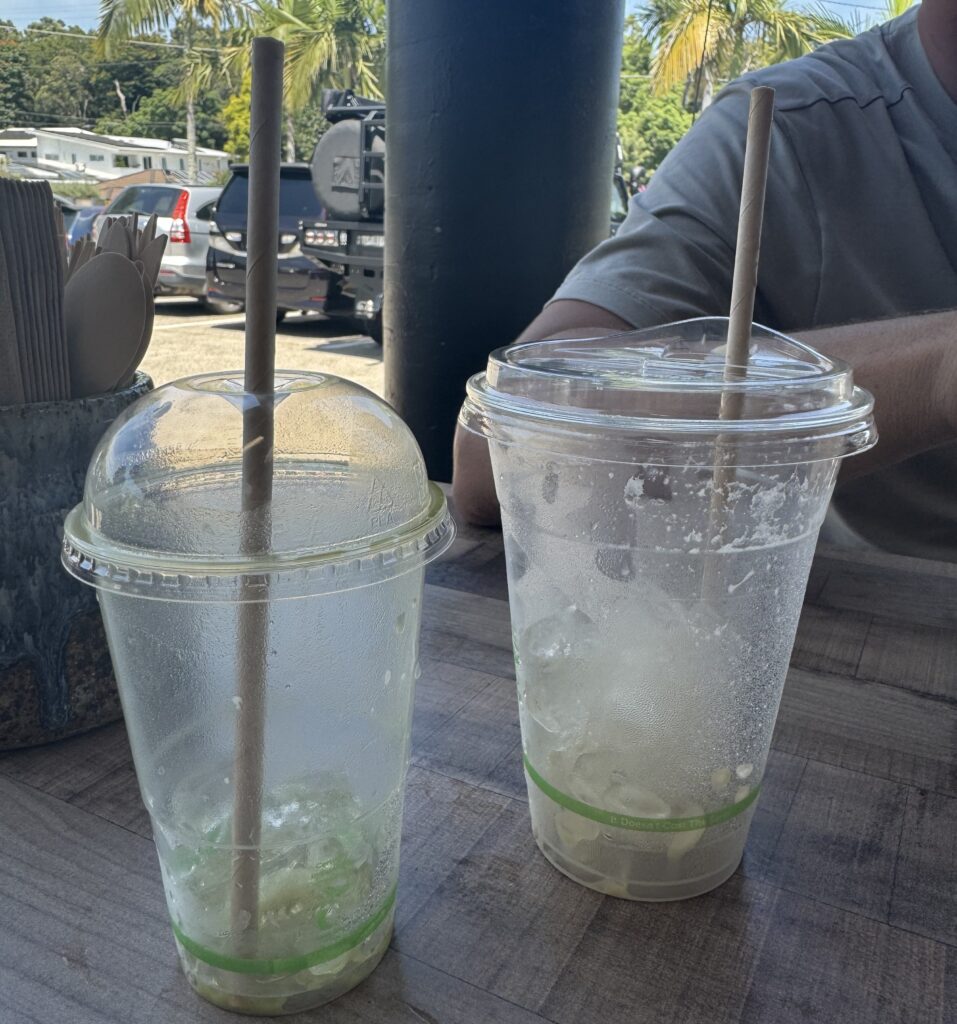
Coffee drinkers (including me) were shocked to learn that the plastic lid on their favourite hot drink was more likely to be recyclable than the cardboard cup it covers up. An invisible plastic liner makes take away coffee cups near impossible to recycle – big problem when we send billions to landfill every year. Enter the solution, the compostable coffee cup! Baristas all over the country are making this responsible switch for drinks hot and cold. Food retailers are doing the same with compostable bowls, containers, and trays. Kinder for the planet… right? With so many sustainability claims on packaging, it is hard to know what is eco and what is eternal. What do all the labels mean? Should we love or hate bioplastics and compostable packaging?
What is the Difference Between Biodegradable and Compostable Packaging?
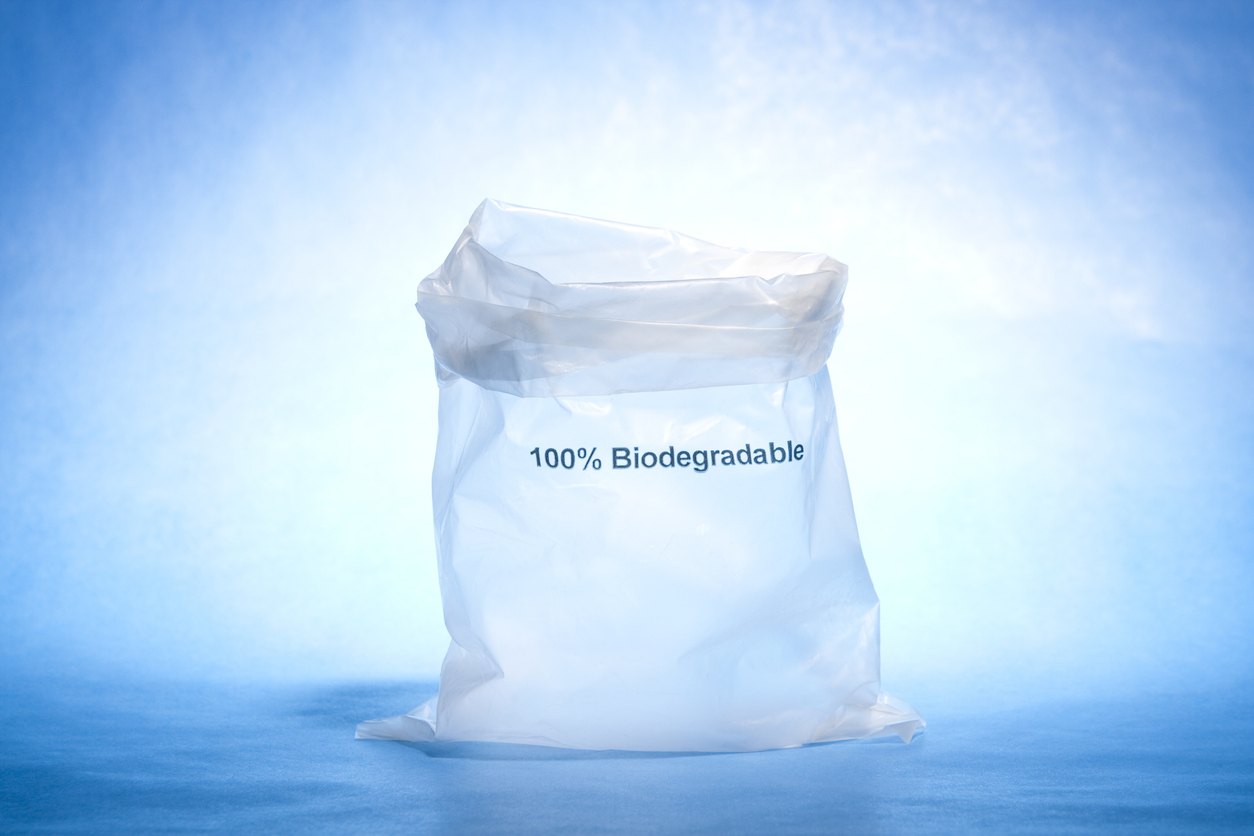
Biodegradable, long touted as a sustainable superstar, tends to be misleading (and has been a greenwashing culprit more than once). Anything will ‘biodegrade’ if you give it decades or hundreds of years. This word does not tell you if a product fully decomposes or simply breaks down into microplastics. And as the world is increasingly aware, microplastics are forever.
Biodegradable raises more questions than it answers. It does not tell you what a product is made of, how long it will take to break down, and to what size. There is no Australian standard of what this word has to mean for consumers. But it sounds sustainable and green enough, so how could people not believe that they have bought a better alternative?
Compostable is a stronger indicator of sustainability. How? Because compostable packaging is made with organic materials that degrade over time, leaving no plastic. This may be packaging made of cornstarch, sugarcane, or organic-inorganic hybrid chemicals like PVAL/ PVOH. These chemicals are not naturally occurring but can be made using natural materials. Sounds good, right? But we are not yet at a happy ending just yet.
Compostable materials only break down when the environmental conditions are right. You cannot just throw your compostable coffee cup into a flower bed to be absorbed into the ground. Different compostable products need different conditions – this is where home compostable vs industrially compostable comes in.
Home Compostable vs Industrially Compostable
Luckily, we have the Australian Bioplastics Association. A non-profit organisation that tests and certifies products on the Australian and New Zealand market. They are extremely helpful for home composters like me.
| Home Compostable | Industrially Compostable |
Look for the AS 5810 logo These packaging items will break down in a backyard compost bin, though the process may take months or years (this is a normal time frame for a compost bin to produce finished compost) Must pass the ‘worm test’ to ensure no toxic effect on plants or earthworms | Look for the AS 4736 logo These packaging items will break down quickly in the controlled environment of a commercial composting facility. These materials need consistent high heat (above 55°C), which is hard for home composters to produce and maintain. |
Unfortunately, this compostable certification scheme is voluntary. Companies whose materials have not been tested (or worse, that failed the test) can still write the word ‘biodegradable’, ‘environmentally friendly’, or ‘compostable’ on their label when they don’t have the evidence to support that claim.
The Problem with Industrially Compostable Packaging
Australia has over 500 local councils. Only 43 accept compostable packaging in their residential compost or FOGO bin collections. Almost all these councils are in South Australia. Shout out to the Composting State! A few are in Western Australia and Tasmania. None are in New South Wales, Queensland, and the Northern Territory, and just one local council in Victoria accepts compostable packaging.
That means that only one council in the three most populous states processes industrially compostable packaging. And put simply, no processing facility means that our ‘green’ coffee cups go straight to landfill.
Unfortunately, industrially compostable food packaging has started selling by the truckload before the closed loop system they are supposed to be a part of even exists. We may blissfully think that our compostable packaging is a step in the right direction, but the harm these products cause when the conditions for their decomposition are not met is possibly just as severe as plastic.
The only silver lining is that industrially compostable packaging does not have to be eternal. So, what about home compostable? You should just be able to drop these off at your local compost hub and problem solved, right? Well…
Why Many Home Composters and Community Gardens Do Not Process Compostable Packaging?
Many composters pull their nose up at bioplastics and home compostable items. Community and home composters who do not want compostable packaging fall into two camps.
The first, those who don’t trust the labels or people’s ability to sort the home compostable from the industrially compostable or ‘biodegradable’. This is a big problem. Especially for volunteer-run organisations that are time poor and are not supposed to serve as a rubbish-sorting facility. Labelling and marketing of packaging is so confusing. I have gotten it wrong myself at times. So, how could someone with no composting experience navigate this clearly?
Secondly, there are those who do not want the compostable packaging because it has nothing to add to soil health. Composting is not just the act of diverting waste from landfill. It is the processing of organic waste to create a valuable soil improver in the form of decomposed organic matter. This ‘black gold’ is a desirable product that will make for lush gardens and bigger quantities of fruit and vegetables. Anyone in the business of composting wants to sell excellent quality compost. This is where compostable packaging and bioplastics fall short.
In the second group there are also people who are concerned about possible chemical contamination. There have been reports of compostable materials containing chemicals like PFAS, so their concerns are not unfounded. Luckily, ABA is now screening for PFAS and related chemicals in their certification tests. Producers and distributors of compostable packaging need to uphold high quality standards for their products if they want trust from consumers.
Do I Compost Home Compostable Packaging?
Any composting purist would refuse to add home compostable packaging to their pile or worm farm. I am not that strict. Diverting waste from landfill is my main motivator for composting. That it turned out to be fun was a nice surprise. I have added many home compostable materials to my compost bin – baking paper, cling film, icy pole sticks, chocolate wrappers, mailers, and more. Compostable baking paper and cling film are quick to disappear, the chocolate wrappers from Loco Love (their Almond Caramel Crunch is delicious!) and home compostable mailers take a long time. I only add a little bit at a time, and only when my compost is looking healthy. Currently, there are only a few items that have a home compostable alternative to plastic. I hope that this number grows, and I will only trust the packaging if it has the AS 5810 logo.
I am among a minority of home composters that process home compostable packaging. And this is unfortunate. So much waste can be composted at home, and it is fantastic that there are businesses going out of their way to give consumers this option.
So Should We Love or Hate Bioplastics and Compostable Packaging?
The famous motto for handling consumer product waste streams is Reduce Reuse Recycle. There is a reason for that order. Nothing will compare to the impact of reducing single-use items. It is the only solution that does not require other complex solutions. Consumers need more packaging-free options. To be honest, I am still on the fence about whether I love or hate bioplastics and compostable packaging. But I will take home compostable packaging over anything else if given the choice.
If you want to reduce what you send to landfill, start composting! Even if you decide not to worry about compostable packaging, you will amaze yourself with everything you can in a process worm farm or compost bin. And don’t underestimate the power of keeping a reusable coffee cup in your bag or your car.