
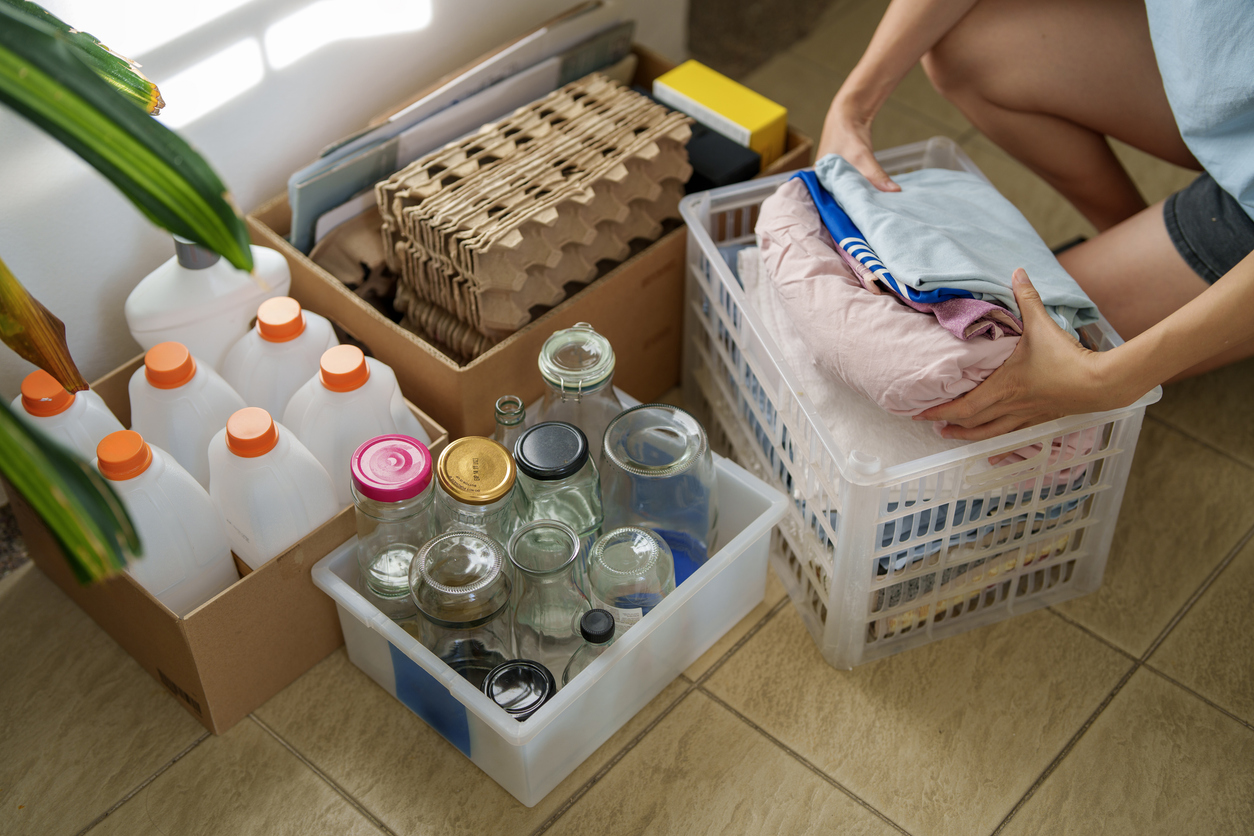
Let me preface this list by saying that I am not an arts and crafts person that tries to turn unwanted items into new creations. I am just a person who does not feel good about sending everything to landfill, especially since most of what gets thrown out can serve a purpose.
Simple Strategies to Reduce Reliance on Landfill
My strategies are simple. I compost at home, drop off recyclable items in the right location, and take some harder to recycle items to the Post Office so they can get to the right facility. A few spots in the house and garage get taken up by bags or boxes that collect items for recycling, but disposing of these items is not time-consuming.
1. Baking Paper
Home compostable baking paper is an easy find in most supermarkets these days, and the price difference is miniscule. I can buy a regular non-stick 30-metre roll at my local supermarket for AU$0.28 per metre, while my Multix 25 metre Greener Baking Paper costs AU$0.30 per metre.
2. Blister Packs
You can save up empty blister packs and drop them off at any pharmacy that participates in the Pharmacycle program. Chemist Warehouse participates in this program, just find the bin in store.
3. Eggshells
Our eggshells go into our compost bin. They are a good source of calcium, a valuable nutrient that you want to have in your finished compost.
4. Egg Cartons
Your typical brown paper pulp egg cartons are compost-ready once you remove the label. They also make a good tray to start off some seedlings.
5. Old Sneakers and Sports Shoes
You can drop these off for recycling in stores that participate in the Tread Lightly program.
6. Fruit and Vegetable Scraps
All of this goes in our compost bin, except for citrus fruits and onion and garlic (the dry outer skins are fine). Citrus and onion are highly acidic and resistant to decomposition, so it is best to compost these in very small amounts.
7. Fabric Softener Bottles
Fabric softener is not necessary for washing your clothes. It works as a chemical coating that is added after your clothes and linens are washed. It can also cause buildup in your washing machine, make your clothes less fire resistant, and reduces your towels’ ability to absorb moisture (true for all materials, just more problematic for towels). So I stopped using it.
8. Laundry Detergent Bottles
There are two alternatives here. You can opt for laundry sheets. I am currently using up Undo This Mess Detergent Sheets. I also have an old detergent bottle which I fill up at my local bulk food store. They have a lavender scented option that I love.
9. Plastic Bags and Wrapping for Flour, Rice, and Dried Legumes
These were the first items I started buying in bulk at The Source.
10. Plastic Bags and Containers for Herbs, Spices, Nuts and Seeds
I have a collection of uniform jars with golden lids thanks to a slight obsession with Meredith Dairy’s marinated goats’ cheese. These now house the nuts and seeds I buy at the bulk food shop and look great on my pantry shelves. I also have a spice rack with refillable glass containers.
11. Coffee Grounds and Used Loose Leaf Tea
These can go straight into the compost bin.
12. Brown Paper and Cardboard
Brown material is very important for healthy compost; you need a lot of it. So, if paper or cardboard is not coloured, glossy, or coated, and free of tape or glue, it goes in the compost.
13. Stained or Worn-Out Clothing
In the last few years, clothing recycling companies in Australia have scaled up their operations to cover just about every type of clothing, even underwear. Read my article on textile recycling to learn more.
14. Old Sheets and Towels
You can drop these off at collection points around the country, either in participating stores around the country or at Give A Sheet for the Planet events. Many vet clinics or animal shelters also love to receive these as warm bedding for their patients.
15. Office Supplies: Printer Cartridges, Batteries, and Used Pens
All of these are prone to leaking harmful chemicals if. Batteries and printer cartridges are particularly dangerous. They are considered hazardous waste. You can take them to your local Officeworks, Harvey Norman, or waste management facility.
16. Contact Lens Cases
For a long time, I felt guilty about my contact lens use, though I do consider them a necessity. The Opticycle program allows you to recycle your single-use lens cases. The envelopes come with a fee, but they can hold up to 350 contact lenses, or 175 days of single use lens cases.
17. Random Fabric Bags
Increasingly, shops seem to give out fabric bags as a replacement for plastic bags. The intention might be good, but a cotton or jute bag needs to be reused many times before it justifies the resources it took to be made. Luckily these can go to the same programs that recycle clothing.
18. Plastic Toothbrushes
While many biodegradable toothbrushes still use artificial bristles, it is a big improvement that the handles do break down.
19. Freezer Safe Bags
I freeze food or leftovers in Tupperware of silicon containers. On the odd occasion, I freeze larger things like leftover cuts of meat in Compostic’s compostable, worm-bin friendly freezer bags. One thing to keep in mind with these is that they will start to lose durability naturally after sitting around for 12 months (a fact I find reassuring!).
20. Old or Damaged Eyeglasses and Sunglasses
My optometrist, and many others around Australia, including Specsavers, accept old sunglasses and eyeglasses for Opticycle’s recycling program.
21. Single-Use Hand Soap Dispensers
I love decorative soap dispensers and keep one next to every sink in our house. I have a big refillable bottle for hand soap that I take to the Source. This is not the cheapest option. But you can still reduce plastic by buying large bottles of hand soap and refilling your dispensers.
22. Black Plastic Plant Pots
Bunnings and many other independent garden centres take these for recycling.
23. Drink Cans, Wine Bottles, and Some Plastic Bottles
Containers For Change might be Australia’s most famous recycling scheme! You get $0.10 back for every item you drop off.
14. Plastic Razor Blades and Refills
Last year I bought a Leaf reusable razor with a pivoting head (a must to avoid cutting yourself). I also got the blade recycling tin, where I keep used razor blades until full. I drop these off as scrap metal in my local waste management facility. This one is worth the investment. The 50 pack of Leaf blades allows me to refresh my blades almost 17 times (I use 3 blades at a time). This pack almost matches the cost of the 4 pack of Gillette Venus Comfortglide refills, which I need to replace far more frequently.
25. Glad Wrap
Most of the time, I store leftovers in Tupperware containers. I also have a home compostable glad wrap that I use sparingly, mostly to cover pasta or pizza dough that I make and needs to rest without drying out.
Really good tips
Thank you, Juan!